
9/11 Cinema: 'Black Hawk Down'
Vice President Dick Cheney invoked the Pentagon-backed film while arguing for greater U.S. military intervention to fight terrorism

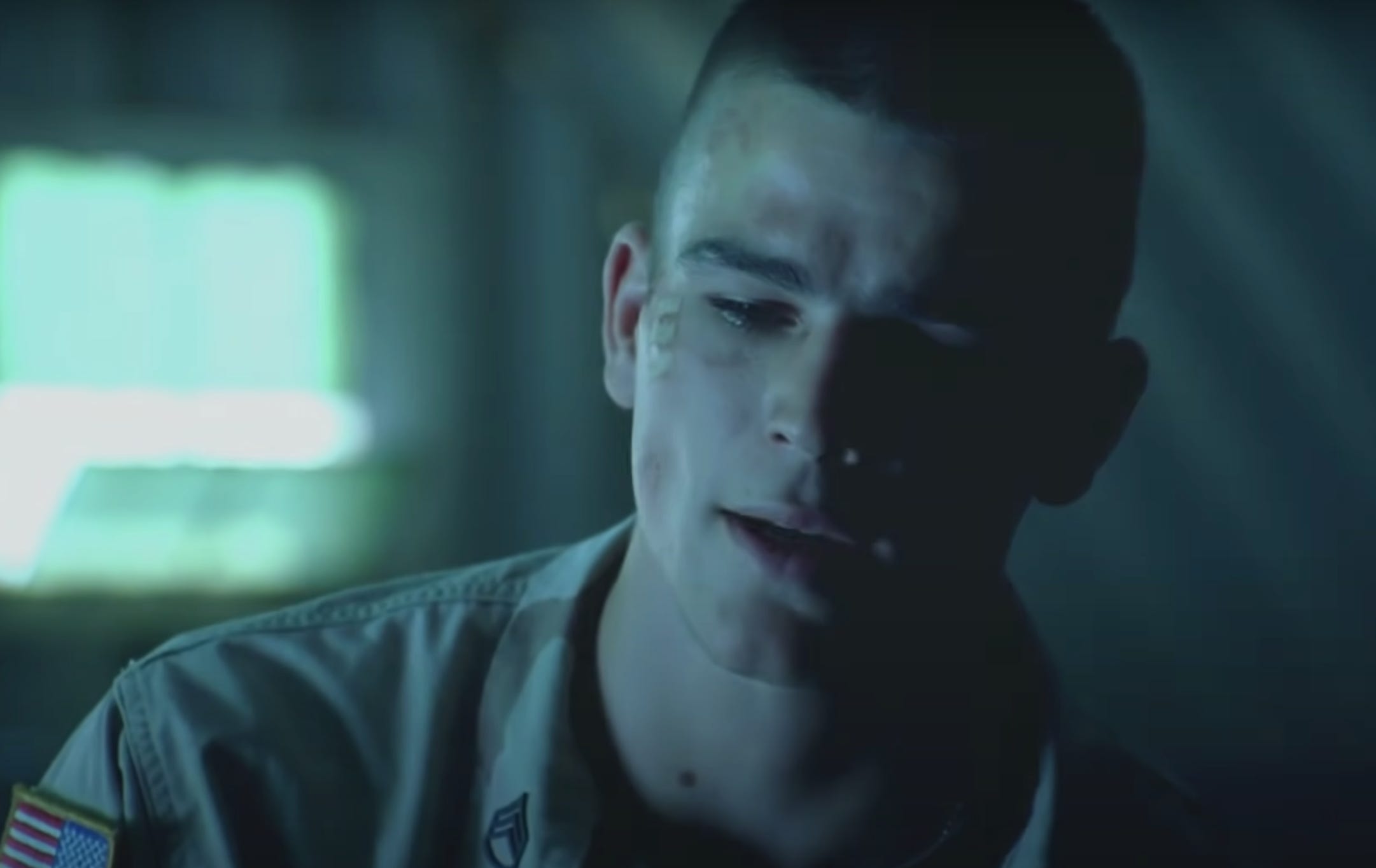
During the 2004 presidential campaign, Vice President Dick Cheney defended President George W. Bush’s response to the 9/11 attacks and invoked “Black Hawk Down” at a town hall event in Milwaukee, Wisconsin.
“If you saw the movie ‘Black Hawk Down’ it portrays the events where we lost 19 soldiers in the battle in Mogadishu, and within weeks, we’d pulled all of our forces out of Somalia. So two lessons, one, they could strike us with impunity; and, two, if they did hit us hard enough, they could change [United States] policy.”
“What happened, of course, on 9/11 was they escalated, an ever higher level, killed 3,000 Americans, struck us here at home, and so that the approach that we’d taken before, that sort of, ‘well, it’s just a law enforcement problem,’ approach clearly didn’t work,” Cheney added.
The film, directed by Ridley Scott and produced by Jerry Bruckheimer, was made with full support from the Pentagon before the attacks. But its release date was moved from March 2002 to December 2001 and an expanded release on January 18, 2002, precisely because it was a tale of American heroism that could sell audiences on the supposed necessity of U.S. military intervention.
During the months after the attacks, Cheney hid in what the White House described as a “secure, undisclosed location.” However, in a rare public appearance he attended the “Black Hawk Down” premiere in Washington, D.C., on January 15, 2002, at the Uptown Theater.
Cheney was joined by Pentagon chief Donald Rumsfeld, Pentagon Deputy Secretary Paul Wolfowitz, Army Chief of Staff General Eric Shinseki, General John M. Keane, the army’s vice chief of staff, Oliver North, who was implicated in the Iran-Contra scandal in the 1980s, Marine Corps General Peter Pace, the vice chairman of the Joint Chiefs of Staff, and Army Secretary Thomas E. White Jr.
Both Rumsfeld and Wolfowitz described the film as “powerful.” Months later, they became key architects of the invasion and occupation of Iraq.
‘It’s Good For This Time’
If one wants to know how the U.S. military could wage war in seven different countries over the past 20 years, fuel terrorism and make the people less safe in all conflicts, and still have the unwavering support of the American people, look no further than films like “Black Hawk Down.” Scott even said that the Pentagon saw it as a “recruitment film.”
It was adapted from journalist Mark Bowden’s 1999 book, “Black Hawk Down: A Story of Modern War.” However, the filmmakers stripped away much of the political and historical context found in Bowden’s narrative of the raid by Army Rangers and Delta Force operators.
In the movie, Sergeant Matt Eversmann (Josh Hartnett), a Ranger, leads a unit to capture two of General Mohamed Farah Aidid’s lieutenants. Aidid is introduced as a thug stealing humanitarian aid from the Somali people and committing genocide.
General William Garrison (Sam Shepard) outlines Operation Irene, which is only supposed to last 30 minutes. The raid becomes a grisly disaster as two Black Hawk helicopters crash. Combat units in the market struggle to find their way out of the urban setting while militants fire on their tanks and surround soldiers tending to the wounded.
Commanders are unprepared to provide the support necessary to extract the men before more death occurs. Increasingly, soldiers panic and fire into crowds of people who cannot all be militants, but often the soldiers clearly do not know where the shooting is coming from or who is shooting at them. Every hour the young men have less and less ammunition, and worse, they lack the medical equipment to save soldiers in need of evacuation.
By the next morning, the Tenth Mountain division and a United Nations convoy enter the market to ensure no soldiers, dead or alive, are left behind. Eversmann and remaining members of his unit follow on foot behind a convoy carrying the wounded to a U.N. “Safe Zone.” Somalis are shown outside the gate cheering for the Rangers as they arrive.
What Happened In Somalia Before ‘Black Hawk Down’
Much of the film was an aesthetic achievement. It won Academy Awards for editing and sound. It was nominated for Best Directing (Ridley Scott) and Best Cinematography (Slawomir Idziak). The cast is filled with actors, who were just beginning their careers—Ewan McGregor, Orlando Bloom, Eric Bana, Jeremy Piven, and Nikolaj Coster-Waldau.
But what unfolded on screen was military industrial-complex myth-making. It hid the failure of the raid by obscuring the fact that Army Rangers and the Delta Force were deployed to capture Aidid and other leaders of his clan. They left with only two leaders.
Lidwien Kapteijns, an African history professor at Wellesley College in Massachusetts, wrote in an essay for “Framing Africa: Portrayals of a Continent in Contemporary Mainstream Cinema,” “The film conceals the fact that U.S. political and military involvement in Somalia did not begin with the famine in 1992 but goes back to the early 1980s, when the U.S., in the context of the Cold War, began to financially and militarily support military dictator Mohamed Siad Barre, who increasingly used large-scale violence against civilians.”
The U.S. was in the middle of the Gulf War and did nothing for the people of Somalia after the brutal dictatorship collapsed in January 1991, and as Kapteijns noted, Aidid murdered “tens of thousands and expelled hundreds of thousands of Somali civilians.”
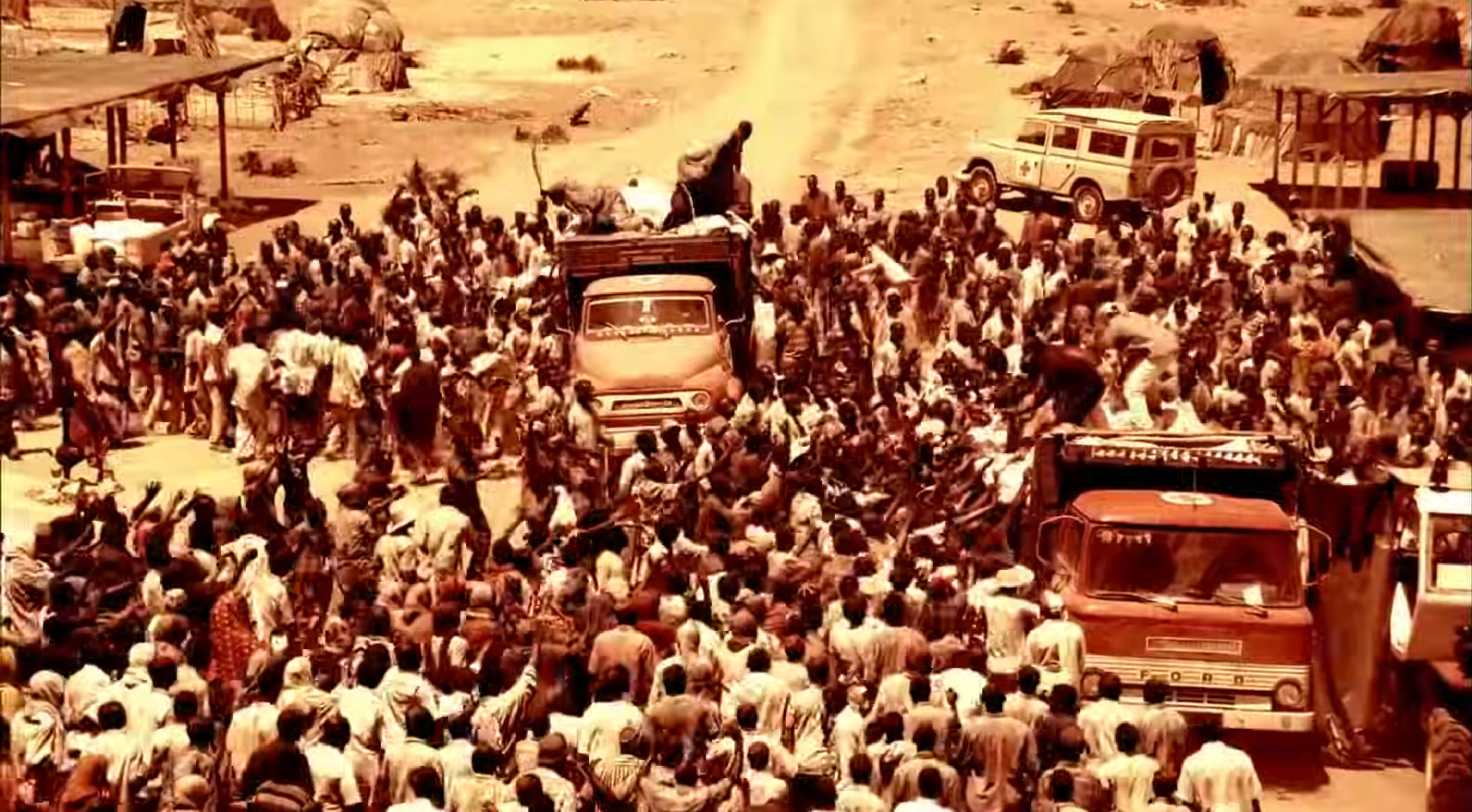
In the first three minutes of the film, the audience is told that in 1992, “Years of warfare among rival clans causes famine on a biblical scale. 300,000 civilians die of starvation. Mohamed Farrah Aidid, the most powerful of the warlords, rules the capital of Mogadishu. He seizes international food shipments at the port. Hunger is his weapon. The world responds. Behind a force of 200,000 U.S. Marines food is delivered and order is restored.”
As Kapteijns pointed out, the famine that triggered the 1992 intervention was the aftermath of the violence sparked by the fall of a U.S.-backed dictatorship. “When the U.S. sent its military into Somalia in early December 1992, it had been formally absent from Somalia for less than two years. The film gives no inkling of this earlier involvement.”
The opening credits jump to April 1993, telling viewers that Aidid “waits until the Marines withdraw and then declares war on the remaining U.N. peacekeepers. In June, Aidid’s militia ambush and slaughter 24 Pakistani soldiers and begin targeting personnel. In late August, America’s elite soldiers, Delta Force, Army Rangers, and the 160th SOAR are sent to Mogadishu to remove Aidid and restore order.”
But the background skips over July 12, 1993, when U.S. helicopters attacked the house of Aidid’s interior minister. Leaders from the Habar Gidir clan were there to discuss peace proposals from Admiral Jonathan Howe, the U.S. special representative to the U.N.
According to Bowden‘s own reporting, ninety-year-old Sheik Aden and poet Moallim Soyan, along with other educated and well-respected men, were killed by missiles.
“The Abdi house attack became widely regarded as a symbol of the U.N./U.S. loss of direction in Somalia, from humanitarian champion to mass murderer,” journalist Natalia Megas wrote in 2019, as she recounted the civilian massacre that occurred prior to the “Black Hawk Down” incident.
Another reality hidden from the audience is that Aidid had a cozy relationship with Robert Oakley, the U.S. special envoy to Somalia appointed by President George Bush.
Alex de Waal, a British expert on African politics in the Horn of Africa, recalled in the New Left Review, “Oakley rented his large and expensive residence in Mogadishu from Aidid’s main financier Osman ‘Atto,’ used Aidid’s moneychangers for the lucrative business of converting U.S. dollars to Somali shillings, and gave the general a series of public relations coups by heralding ‘breakthroughs’ in peace talks that had in fact been negotiated by UN diplomats some months earlier.”
The film shows Atto being captured. The depiction is a caricature. He taunts interrogators, and says, “This is civil war. This is our war. Not yours.” In reality, he worked for American oil companies before Barre was toppled and was a wealthy owner of construction equipment that led Western companies to collaborate with him on projects. He did not smoke cigars or wear earrings.
‘It Reeks Of Glumly Staged Racism’
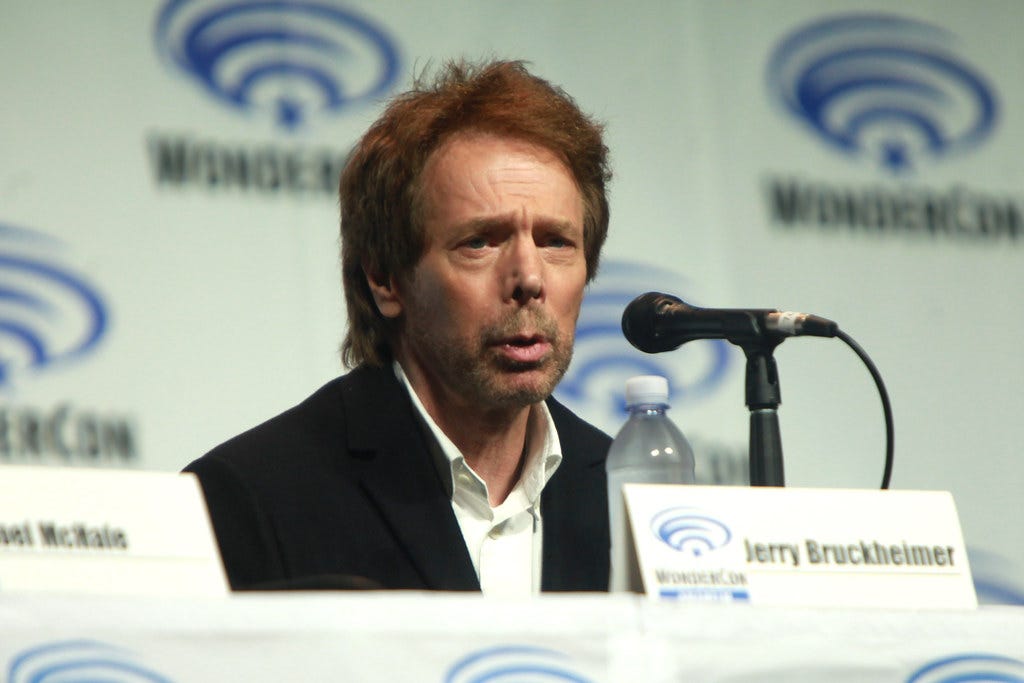
John Shelton Lawrence and John G. McGarrahan examine “Black Hawk Down” in their book, “Why We Fought: America’s Wars in Film and History.” They recount how Jerry Bruckheimer turned to the Pentagon for personnel and equipment.
“He came into my office and said ‘General, I’m going to make a movie, and your Army will be proud of [it].’ He did, so we thank him,” General John M. Keane, the army’s vice chief of staff, recalled.
For $2.2 million, the Pentagon lent the production 100 troops and eight helicopters. The U.S. and Moroccan governments agreed to allow four Black Hawk helicopters and four Little Bird helicopters into Morocco, according to Lawrence and McGarrahan.
“To develop the proper military stances and maneuvers, actors trained at Fort Benning, Georgia (Rangers), Fort Bragg, North Carolina (Delta Force), and Fort Campbell, Kentucky (helicopters).” (Fort Benning was the home of the School of the Americas.)
Lawrence and McGarrahan emphasized that the bloodshed, which preceded the time period in the film, was fueled by “leftover weapons from Somalia’s past as a Soviet and then an American client state” under President Jimmy Carter’s administration.
There are no developed Somali characters in the film, which reflects the contempt and ignorance of the troops who refer to them crudely as “skinnies.”
When Somalis do appear on screen, they appear as a barbarian horde, such as when they descend upon the helicopter crash sites. Or they are hungry and defenseless women and children, who need U.S. military intervention to survive. That is especially the message in the opening credits when their corpses are shown pornographically.
The confidential human source, who helps the troops uncover the location where the meeting will be held by Aidid, is credited as “Somali Spy.” The filmmakers do not seem to care why he took the risk to help U.S. military forces nor do the commanding officers seem willing to acknowledge the risk he is taking.
This is the only “Good Somali” character in the film. The others are all warlords, whose dialogue seems intended to illustrate a colonial perspective that these people will never be able to govern like a civilized Western democracy. Everything U.S. soldiers are doing amounts to nothing.
In Minneapolis, the Somali community was upset by the film and feared it would fuel a backlash against them as refugees. Omar Jamal, the executive director of the Somali Justice Advocacy Center, told the Associated Press, “We don’t know what Americans will think of us Somalis after they watch this movie,” said Omar Jamal, executive director of the Somali Justice Advocacy Center. He called for a boycott.
After seeing the film, Jamal said, “The Somali people are depicted as very savage beasts without any human element. It’s just people shooting each other.”
Few movie critics recognized that the film was trafficking in propaganda, however, New York Times critic Elvis Mitchell bluntly dismissed “Black Hawk Down” and focused on the racism that was core to the movie.
In ‘Black Hawk Down,’ the lack of characterization converts the Somalis into a pack of snarling dark-skinned beasts, gleefully pulling the Americans from their downed aircraft and stripping them. Intended or not, it reeks of glumly staged racism. The only African-American with lines, Specialist Kurth (Gabriel Casseus), is one of the American soldiers who want to get into the middle of the action; his lines communicate his simplistic gung-ho spirit. His presence in this military action raises questions of racial imbalance that ‘Black Hawk Down’ couldn’t even be bothered to acknowledge, let alone answer.
Mitchell’s review was a rare example of dissent from critics. Los Angeles Times critic Kenneth Turan called the film a “triumph of pure filmmaking, a pitiless, unrelenting, no-excuses war movie so thoroughly convincing it’s frequently difficult to believe it is a stage re-creation.” Rolling Stone critic Peter Travers wrote, “This huge $90 million undertaking is a personal best for producer Jerry Bruckheimer, a triumph for Scott, and a war film of prodigious power.” The Washington Post’s Desson Thempson said it was a “compelling account of the 1993 Battle of Mogadishu.”
Even renowned movie critic Roger Ebert was mesmerized. “Films like this are more useful than gung-ho capers like ‘Behind Enemy Lines.’ They help audiences understand and sympathize with the actual experiences of combat troops, instead of trivializing them into entertainments.”
The Patriotic Fervor of ‘Black Hawk Down’
“Black Hawk Down” grossed nearly $28 million in its opening weekend and was the number one film ahead of “Snow Dogs,” “Lord of the Rings: Fellowship of the Ring,” and “A Beautiful Mind.” It had a $92 million budget and made over $172 million globally.
While promoting the film, Jerry Bruckheimer appeared on CNN with Ridley Scott. Host Judy Woodruff displayed no concern about the role of the Pentagon in determining the narrative of the film.
“How much of an obligation, Jerry Bruckheimer, do you and others in Hollywood, do you think, feel to be patriotic, particularly at a time like this?” Woodruff asked.
“Well, I think it is a very difficult time. We are at war. I would love to lift the spirits of our country, if we possibly can. But it all comes down to the story, because an audience will see through the kind of patriotic fervor unless it’s honest and true. And it comes down to what we are presented with,” Bruckheimer responded.
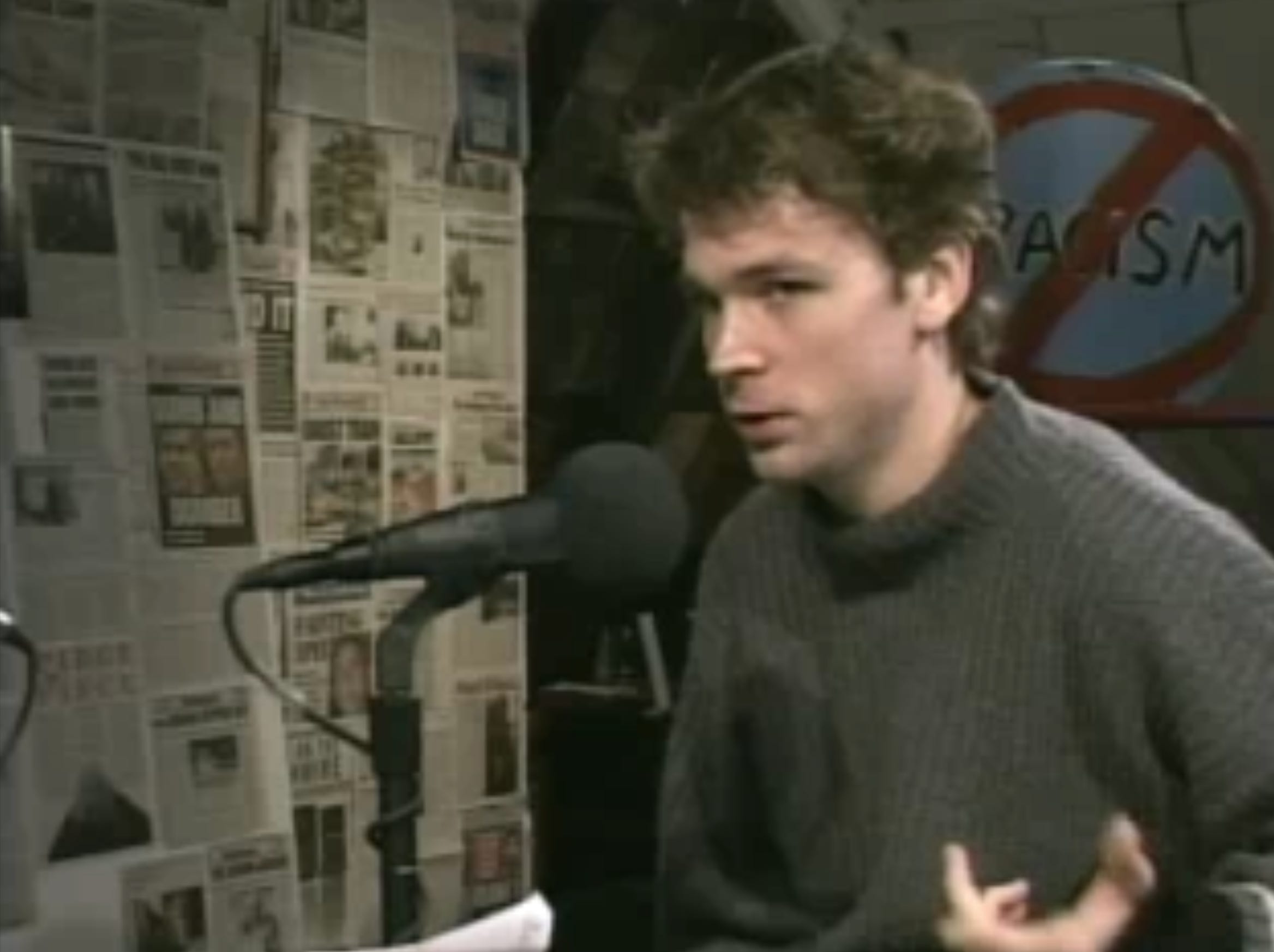
Brendan Sexton, who stars in the film, offered a contrasting viewpoint on “Democracy Now!” a month after the film’s release.
“The person that my character is based on was a private. His name was Richard Kowalewski, and not many people could pronounce his name so they called him ‘Alphabet,’” Sexton said. He was the only U.S. Army Ranger on the task force who did not want to be in Somalia, and according to Bowden’s book, Sexton mentioned that he did not want to be shot at or shoot at anyone. He a had a fiancé at home and was so scared that he stood “guard at the base every night.”
But for the particular mission that unfolds in the film, the military needed more people for the ground convoy. Kowalewski was “chosen to drive a truck and that’s when he caught a rocket propelled grenade through his chest that didn’t explode,” according to Sexton. “[It] ended his life.”
Sexton was one of the few cast members in the film to use his role in “Black Hawk Down” as a means to speak out against the global war on terrorism. He said that he believed the film showed that war was horrible but “necessary to keep the world free of evildoers” and called out the racist depiction of Somalis, quoting Mitchell’s review.
“I don’t think I personally even realized how racist it was going into it,” Sexton shared. In early drafts of the script, “some of the characters questioned why they were there in the first place—why they were targeting this particular one war lord, General Aidid, and not the dozens of other war lords out there; what made him so evil. Were they even effective there? Were they even doing a good job?” That was all removed, and the actors barely noticed the crude depiction of Somalis because they mostly worked separately from the “eastern African people flown into Morocco to play extras in the film.”
“One of the scenes that attracted me to the movie was a scene I wasn’t involved with particularly, but a scene between Corporal Jamie Smith and Sergeant Eversmann, which is the main character in the film,” Sexton added. “They’re playing ping pong talking about what’s the use of this. We’ve got hungry people in New Jersey where I’m from.”
The characters consider whether resources could be used differently instead of spent on war in Somalia. “By the time we got to Morocco, that [scene] was gone.”
Another change that the Pentagon inserted into the film involved Ranger John “Stebby” Stebbins, who was played by Ewan McGregor. Except the character was renamed John Grimes in the script because Stebbins was found guilty of raping his six-year-old daughter in June 2000. The Pentagon pressured Bowden to make the change.
Nora Stebbins, who was the soldier’s ex-wife, spoke out. “[Producers] are going to make millions off this film, in which my ex-husband is portrayed as an all-American hero, when the truth is he is not.”
The film’s intricate computer graphics sequences paired with the young cast created hyper-realism that made viewers believe that they were seeing a shot-for-shot recreation. They felt like they had survived the battle with the soldiers after slogging through this two-and-a-half-hour film.
During the credits, viewers were told that President Bill Clinton withdrew the Delta Force and Army Rangers two weeks later. The audience was supposed to believe that a weak president had emboldened terrorists by not allowing soldiers to complete their mission, and they likely walked out thinking Dick Cheney had a point: America needed to take the fight to the enemy and finish the job.
Bush campaigned for re-election a little more than two years later. His administration, along with the broader Republican Party, consistently made a big deal about how it was wrong to “cut and run.” However, they were not defending U.S. military actions in Somalia but advocating for war and occupation in Iraq, which had no end in sight.
I was so impressed with this film when it came out that I watched it repeatedly. I also thought that it didn’t show the US in necessarily a good light, even back then. I tried rewatching it some years ago and found it totally unwatchable and have to agree with Mitchell. I don’t think it’s aged well.
"Saving Private Ryan, aided by superb cinematographic technology, draws on our deep feeling for the GIs, in order to rescue not just Private Ryan but the good name of war.
I will not be surprised if Spielberg gets an Academy Award. Did not Kissinger get a noble Prize?"
youtu.be/p6y_TUoOdfQ?t=1715
***
"It enabled political leaders - whatever miserable adventure they would take us into, whatever mayhem they would wreak on other people and on our own - to invoke WW2 as a model. Vietnam caused large numbers of Americans to question the enterprise of war itself. "
-Howard Zinn, American historian and WW2 veteran
***
Howard Zinn - War Solves Nothing:
substack.com/@thememoryhole/note/c-147094498