
9/11 Cinema: 'Collateral Damage'

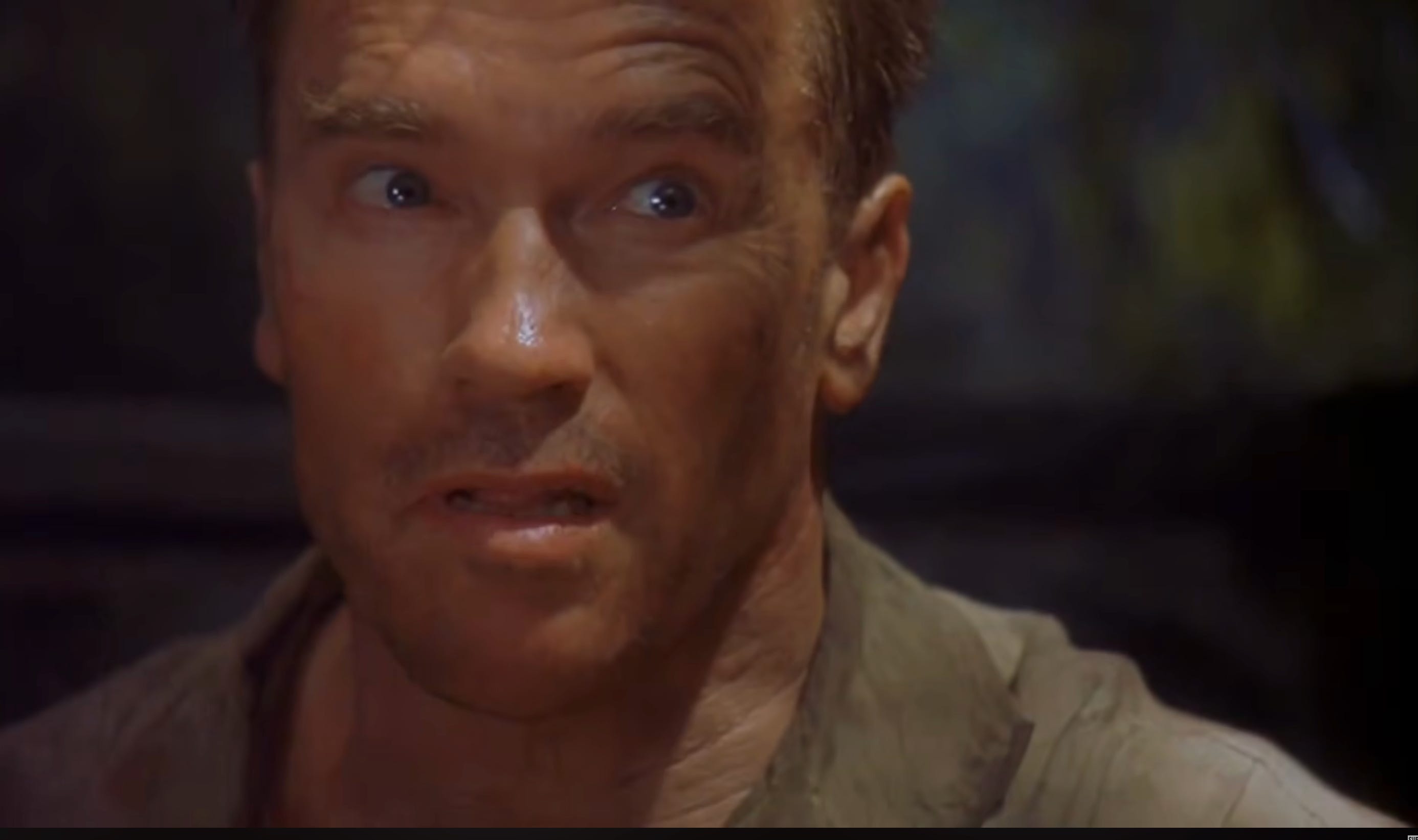
When the World Trade Center exploded and collapsed on September 11, 2001, director Andrew Davis said that he felt “Collateral Damage” became “more important and more significant.” He described his action movie as a story about a firefighter who “goes on a journey to find the man who killed his family, and he realizes that he may be becoming a monster like the man” responsible for their deaths.
“And he says, ‘I’m not going to let you turn me into an animal.’ You know? This is about violence begetting violence, and that’s the message of the film. We have to stop hurting each other because if you hurt somebody, they come back at you,” Davis added.
Davis, known for directing “The Fugitive” (1993), claimed women had responded well to the movie because they recognized that it had a lot of heart and soul. “It’s not an exploitive film in that sense. It’s a thrilling movie that has a very big story to tell.”
But Arnold Schwarzenegger, the star of the movie, had an entirely different perspective. Test screenings were held after Warner Bros. Pictures moved the release from October 5, 2001, to February 8, 2002. At a screening in November, Schwarzenegger said that audiences “wanted to see a positive ending. They wanted us to kick the butts of the terrorists.”
“Because in real life, it’s all so complicated. You know? Where are they? Have we found them all? We’ve found some of them. But [Osama] bin Laden is still out there. Some other guys are still out there.”
“So there’s still a dissatisfaction,” Schwarzenegger added. “But in a movie you close the deal. You close the chapter. Movies bring a certain kind of closure, a fantasy that makes people feel good afterwards.”
Schwarzenegger connected “Collateral Damage” to classic Hollywood films. “It’s no different than during the Second World War or the Vietnam War. That’s how John Wayne became the big hero, along with Kirk Douglas and all those guys. Doing war movies and kicking the Germans’ butts and calling them ‘Krauts’ and all this stuff. It was great, great entertainment.”
Notably, Schwarzenegger emphasized that audiences enjoyed seeing fewer Americans die than the bad guys. What he didn’t say was that “Collateral Damage” had anything to say about violence begetting violence.
Both Schwarzenegger and Davis fairly characterized the movie, though I believe that the cheesy dialogue and overblown action sequences largely drown out any worthwhile message. Still, it is hard not to acknowledge the fact that blowback is a central part of the plot, and when the movie was released, President George W. Bush’s administration saw any discussion of 9/11 in the context of United States foreign policy as furthering the cause of the terrorists.
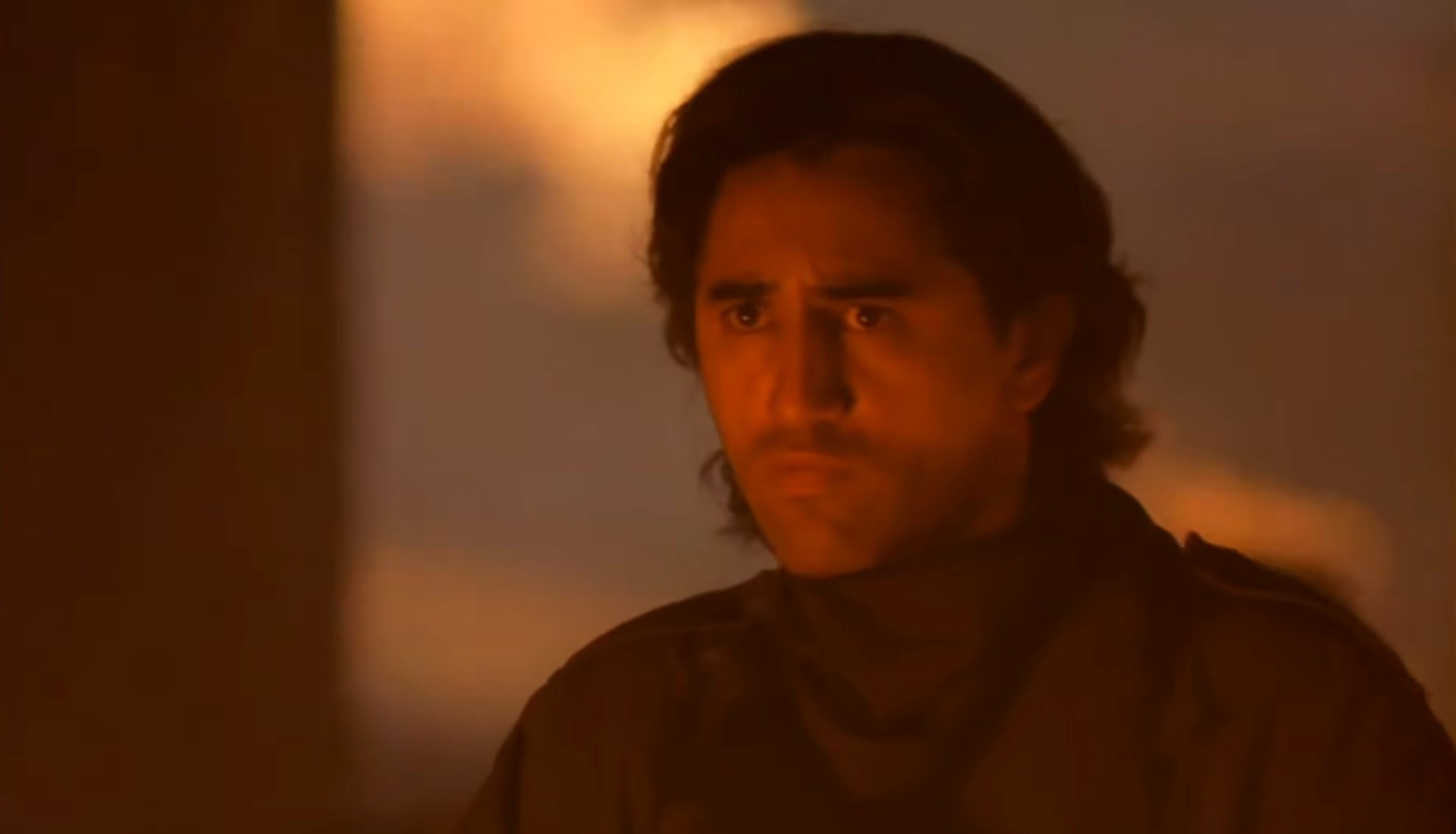
The movie is set in Los Angeles, and it opens with Captain “Gordy” Brewer (Schwarzenegger) saving an elderly person as flames engulf a six-story tenement. We see his wife Anne (Lindsay Frost) and son Matt (Ethan Dampf) at home, and they seem to be a happy family. But in the next scene, Anne and Matt are waiting for Gordy at a table outside the Colombian consulate building when a bomb explodes.
Colombian terrorist Claudio “El Lobo” Perrini (Cliff Curtis) arrives in police disguise. Gordy comes face to face with “El Lobo,” or the Wolf. Then a blast kills U.S. intelligence agents and Colombian officials as well as Gordy’s wife and son. Claudio returns to Colombia.
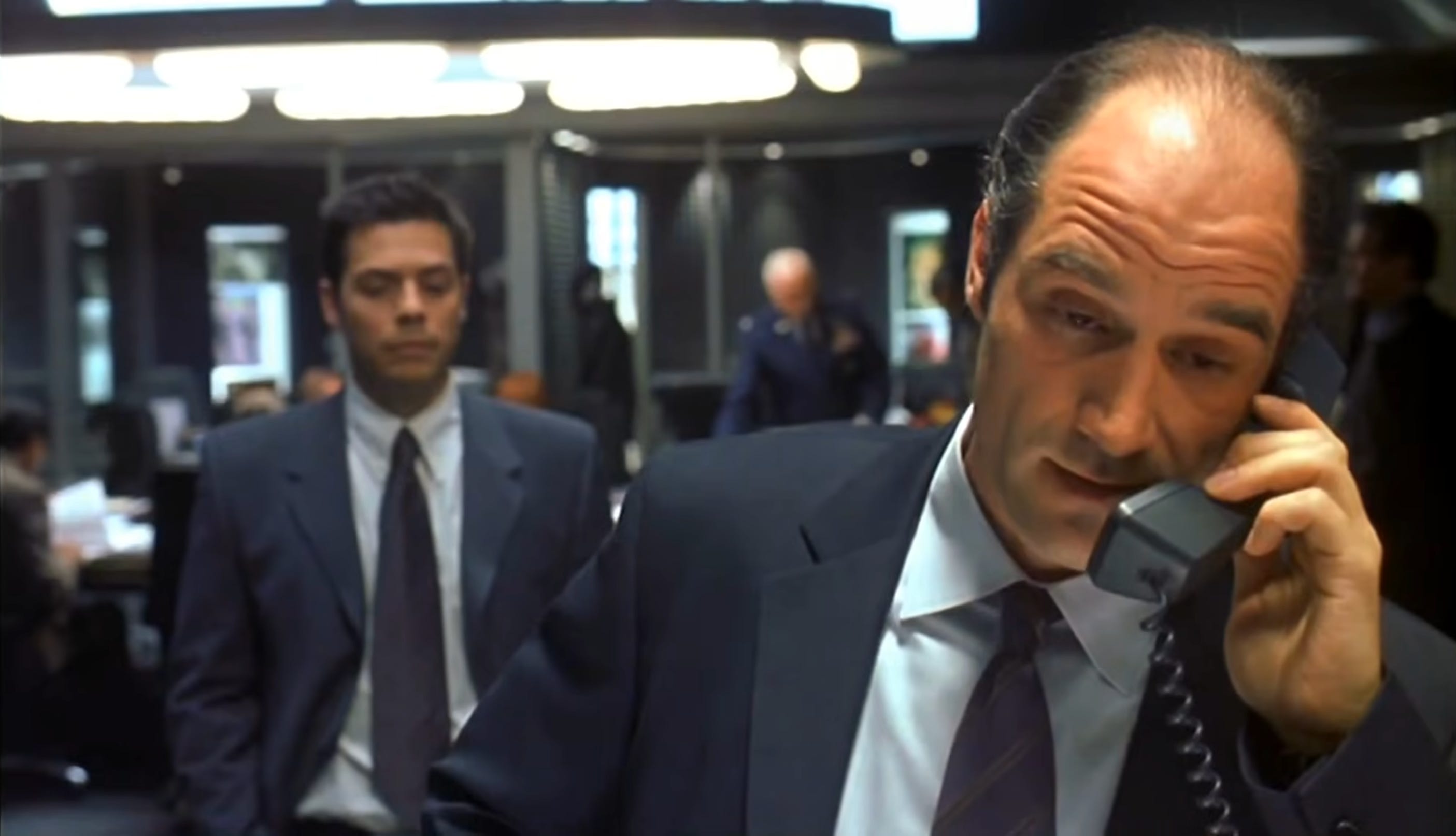
U.S. Senator Paul Devereaux (Michael Cavanaugh) is furious with Peter Brandt (Elias Koteas), the CIA’s Colombia station chief. “All [Brandt’s] done is bring the war home to American soil,” Devereaux states. He informs Brandt that the U.S. government has initiated peace talks with the Colombia government, and the CIA must shut down its operations within the next 72 hours.
Gordy believes that the only way to obtain justice for his wife and son is to carry out a vigilante operation to kill the Wolf in the guerrilla zone. He smuggles himself into Colombia and crosses paths with a woman and a boy. They remind him of Anne and Matt.
After several scenes, including a prison break, Gordy attempts to kill Claudio. But his attempt falls apart when he spots the woman and boy he previously encountered. He tries to save them, and Claudio hears both Gordy and the woman. Claudio jumps out of his compound seconds before the explosion! Then it is revealed that the woman is Selena (Francesca Neri), the wife of the Wolf!
Claudio holds Gordy captive, and Selena has a scene with Gordy, where she tells him they used to live in an Indian village in Guatemala. They had a daughter, but then a civil war broke out. Guatemalan soldiers came to their village in retaliation for an attack by the guerrillas. The soldiers killed their daughter as they were trying to flee, and that pushed Claudio to become a militant and fight U.S. imperialism in Colombia.
Brandt defies the Senate intelligence committee and launches an off-the-books CIA operation to assassinate Claudio. As a shootout erupts, Selena leads Gordy away from the compound. She informs Gordy that Claudio is planning to attack Union Station in Washington, D.C. Everyone returns to the U.S. with the clock ticking. They must find the Wolf and stop him!
‘Preparing the Ground For Yet Another Cycle of Blowback’
Chalmers Johnson was a former CIA consultant, political scientist, and believer in the Cold War. He generally believed that the United States’ commitment to dominating the world through its military sowed the seeds for blowback—a term invented by the CIA to refer to “the unintended consequences of policies that were kept secret from the American people.”
He authored a trilogy of books—“Blowback,” “Sorrows of Empire,” and “Nemesis,” the second of which was written as President George W. Bush’s administration planned to invade and occupy Afghanistan and Iraq.
“We do not think of these overseas deployments as a form of empire; in fact, most Americans do not give them any thought at all until something truly shocking, such as the treatment of prisoners at Guantanamo Bay brings them to our attention,” Johnson wrote in “Nemesis.” “But the people living next door to these bases and dealing with the swaggering soldiers who brawl and sometimes rape their women certainly think of them as imperial enclaves, just as the people of ancient Iberia or nineteenth-century India knew that they were victims of foreign colonization.”
Johnson also stated, “[W]hen the retaliation comes—as it did so spectacularly on September 11, 2001—the American public is unable to put the events in context. So they tend to support acts intended to lash out against the perpetrators, thereby most commonly preparing the ground for yet another cycle of blowback.”
Arnold Schwarzenegger as firefighter Gordy Brewer represents the American public. By all accounts, he is a victim of blowback. Anne and Matt were not even intended targets. Claudio meant to kill U.S. and Colombian officials at the Colombia consulate building, who were in his view responsible for war crimes.
One draft of the script described the Wolf as a “Marxist extremist.” He justified attacking the consulate as an “act of war” that was “aimed at stopping your CIA murderers and their fascist puppets from committing further acts of repression against the people of Colombia.” The head of the Latin America Indigenous People’s Committee told a local news anchor the “leftist guerrillas” in Colombia were fighting two governments, “who wish only to protect a system that lines the pockets of corrupt politicians and multinational profiteers.” He even says, “The deaths of the woman and little boy are regrettable, but your government inflicts them all the time—Yugoslavia, Iraq. You call it ‘collateral damage.’”
But that political context was cut from the movie. The person from the Latin America committee no longer mentions that the U.S. government is frequently responsible for killing innocent civilians like Gordy’s wife and son. He just refers to their deaths “collateral damage,” which Gordy reacts to like a slur. With a baseball bat, Gordy goes to the committee’s office in the next scene and vandalizes everything in sight. “You want collateral damage? I’ll give you collateral damage.” The police are spying on the committee so they dash to the office to detain Gordy before he seriously hurts the spokesperson.
Similarly, the same draft had Selena recounting the violence that radicalized Claudio and made him such an angry person. The filmmakers cut the part where she said that the U.S.-backed Guatemala soldiers accused them of “helping the rebels,” and, “Our women were raped. Our men were tortured. Our homes were burned.” That they threw grenades and hit her baby girl Sophia, who bled to death in Claudio’s arms, made the final cut.
Gordy cannot understand why Selena would speak to him about this incident. When Selena tells him that Claudio is planning another attack, it is as if she has had a change of heart and would like her husband to stop traveling to the U.S. to assassinate people. Plus, maybe Gordy will awaken to all that the people of Colombia (or Guatemala) have been through and why they so desperately want the U.S. government to leave their countries alone.
However, a twist at the end, where it is revealed that Selena was deceiving Gordy all along, cheaply erases any element of reconciliation.
‘We Will Smoke Them Out Of Their Holes’
After the 9/11 attacks, the Bush administration wasted no time laying the groundwork for another cycle of blowback. “We’re at war. There has been an act of war declared upon America by terrorists, and we will respond accordingly,” Bush declared on September 14, 2001.
“[T]his act will not stand. We will find those who did it. We will smoke them out of their holes,” Bush added. “We will get them running, and we’ll bring them to justice. We will not only deal with those who dare attack America. We will deal with those who harbor them and feed them and house them.”
Bush’s promise to pursue revenge mirrored the attitude of ninety percent of Americans, who believed that the United States government should “take military action” in “retaliation for the attacks on the World Trade Center and the Pentagon.”
The CIA armed the mujahideen in Afghanistan to fight the Soviet Union, and Osama bin Laden, who founded al Qaida, which was responsible for 9/11, oversaw a camp, where volunteers from Saudi Arabia and other Arab and Muslim countries were “trained by Pakistani and American officers. The weapons were supplied by the Americans, the money by the Saudis.”
Vice President Dick Cheney was in Congress as this happened. He, along with other high-ranking Bush administration officials, were well aware of the reasons why bin Laden despised the United States. Yet five days after the attacks, Cheney appeared on NBC’s “Meet the Press” and acted as if he was baffled.
“I mean, you have to ask yourself, why somebody would do what he does. Why is someone so motivated? Obviously he’s filled with hate for the United States and for everything we stand for freedom and democracy,” Cheney said.
When asked by host Tim Russert elaborate, Cheney said, bin Laden’s objective obviously was to “try to influence our behavior to force us to withdraw from that part of the world, and clearly he’s not going to be successful.” Russert jumped in, “He has stated unequivocally that he wants the United States out of the Middle East. He no longer wants the United States to be the ally of Israel. Will our relationship with Israel change in any way, shape or form because of this event?”
“No. The fact of the matter is that the—we’ll not allow him to achieve his aims. We’re not about to change our policies or change our basic fundamental beliefs. What we are going to do is aggressively go after Mr. bin Laden, obviously, and all of his associates, and even if it takes a long time, I’m convinced eventually we’ll prevail,” Cheney replied.
Which is part of what makes “Collateral Damage” a notable 9/11 film. In the movie, the leadership of the Senate intelligence committee, along with the White House, apparently felt uneasy enough about projecting American power to seek peace talks. The CIA, especially Colombian station chief Peter Brandt, tried to undermine this shift in policy because ending U.S. involvement would embolden the terrorists, and that tracks with how the CIA typically operates in the shadows.
However, what the CIA is doing in Colombia is not portrayed in a way that valorizes the agency. It is very clear that the agency is unaccountable and reckless, especially as Brandt leads an off-the-books operation to “rescue” the firefighter and kill the Wolf. The operation ignites a skirmish that could have killed Gordy. And considering the fact that the film was released in the post-9/11 era, it is unusual that no one at Warner Bros. apparently objected to the uncivil depiction of the CIA.
Universal Pictures and the producers of “The Bourne Identity” (2002) were worried that making the CIA look like the villain would invite accusations of anti-Americanism. According to Screen Rant, producer Frank Marshall “helped construct new bookends for it that left the viewer with a friendlier notion of the intelligence organization. An alternate opening and ending was shot, essentially changing the movie into one gigantic flashback.” But director Doug Liman fought the effort to alter the story, and after the original version performed well at test screenings, the studio “backed down.”
Of course, it must be mentioned: the idea that the Senate intelligence committee would check the power of the CIA or any part of national security apparatus immediately after a terrorist attack is fantasy. The years after 9/11 were marred by senators (and representatives), who were unwilling to stand up for peace, human rights, and the law.
“Collateral Damage” will always be remembered because it was one of a handful of movies that gained notoriety simply because its release was delayed. Other movies that had their dates postponed were “Bad Company,” “Big Trouble,” “Deuces Wild,” “Gangs of New York,” “Hart’s War,” “View From the Top,” and “Buffalo Soldiers,” a military satire that I wrote about for the 20th anniversary of 9/11.
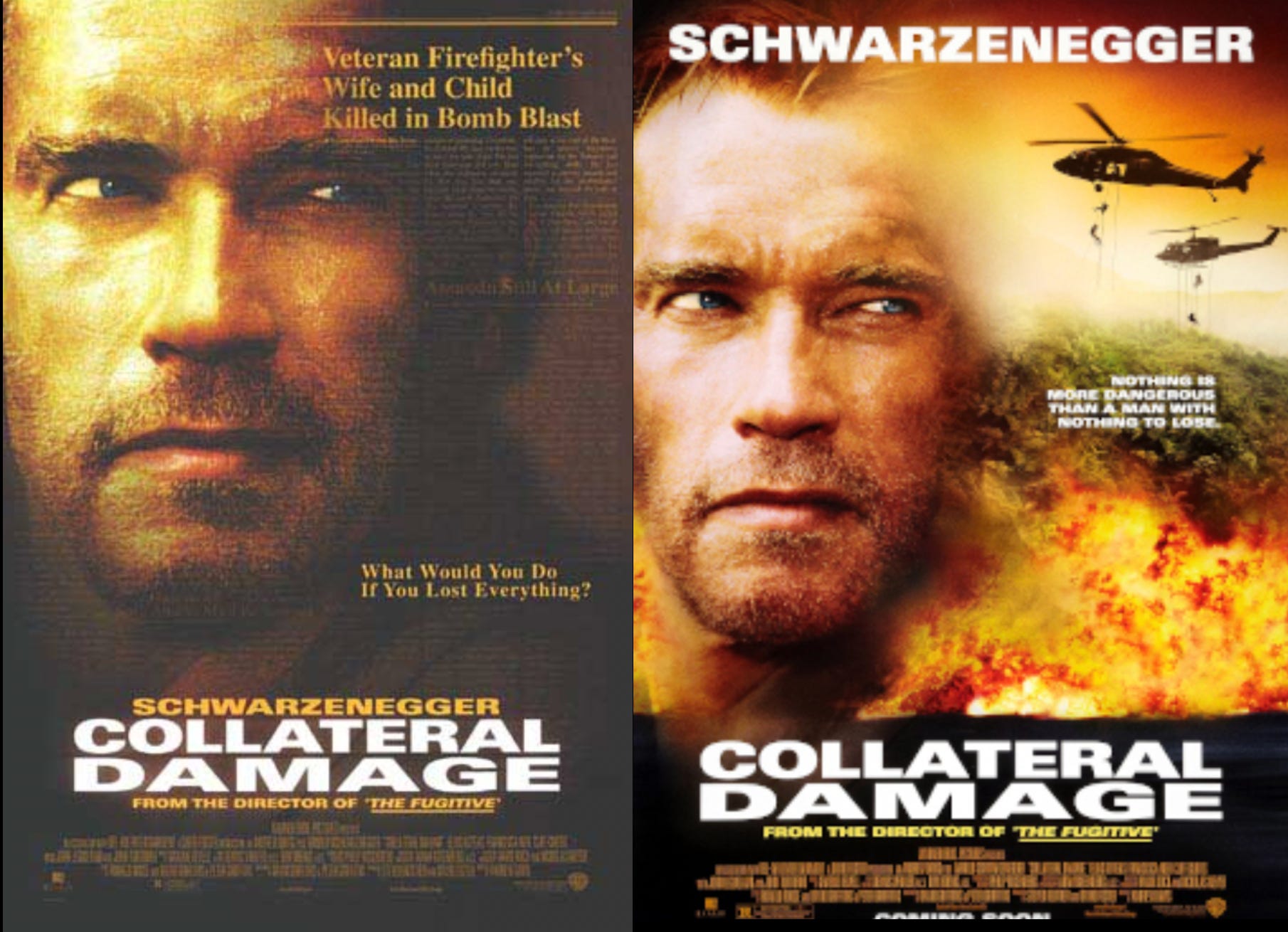
Posters for “Collateral Damage” were in Times Square in New York prior to the tragedy. Arnold Schwarzenegger’s face appeared next to a newspaper clipping with a headline inspired by the movie: “Veteran Firefighter’s Wife and Child Killed in Bomb Blast.” At the bottom was the tagline for the movie: “What would you do if you lost everything?”
It eerily corresponded with 9/11, especially because three hundred and forty-three firefighters died. Neither Schwarzenegger nor Warner Bros. Pictures wanted to be accused of cashing in on the tragedy. So the release date was moved from October 5, 2001, to February 8, 2002.
Colombian actress Sofia Vergara was supposed to appear in the movie, but the sequence that featured her was removed because it involved her character hijacking a plane. The news clipping on the poster was replaced with men dangling out of helicopters that hovered over a jungle as the trees went up in flames. A new tagline was adopted: “Nothing is more dangerous than a man with nothing to lose.”
The news media was largely responsible for the perception that audiences’ taste in entertainment would shift due to the attacks. This led to changes and edits to movies, like the removal of the World Trade Center towers from a number of films. But two of the top video rentals in the weeks that followed were “Die Hard” (1988) and “Passenger 57” (1992) starring Wesley Snipes, a movie that revolves around terrorists hijacking a plane.
“Collateral Damage” was originally set in Libya. Setting the movie in Colombia meant that the movie avoided crude stereotypes of Arabs or Muslims that media scholar Jack Shaheen documented in films. It also wound up becoming relevant as the Bush administration pushed to include Colombia in the war on terrorism and talks between the Colombia government and the Revolutionary Armed Forces of Colombia (FARC) collapsed by late February.
Though by that time, the movie had flopped, and not because it was too soon to expect that audiences would go see an action thriller that revolved around terrorism. It simply was corny and treated important topics, like blowback, too insincerely and shallowly—dooming it to a future in Walmart’s five-dollar DVD bin.